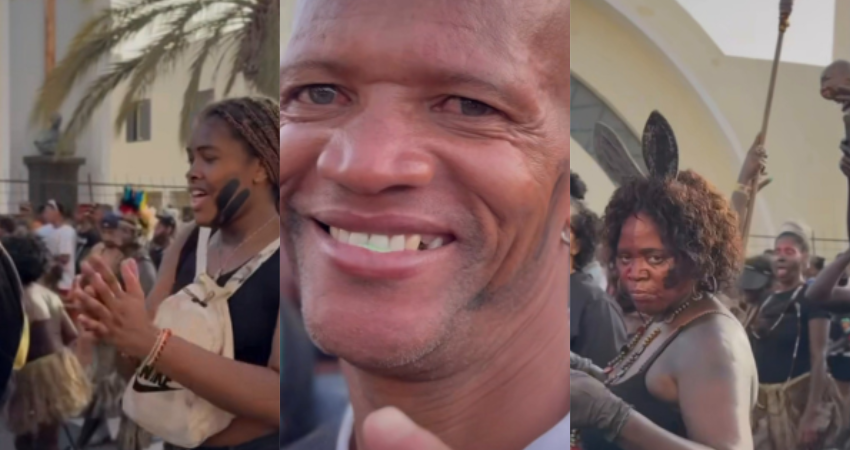
Carnival is one of the biggest and most spectacular events in Cape Verde. It is celebrated on a grand scale, especially on the island of São Vicente. The Mindelo carnival is often compared to the Brazilian carnival. One of the most striking and fascinating traditions during this festival is that of the Madingas. This group plays a significant role in the carnival and serves as a powerful expression of Cape Verdeans’ African heritage.
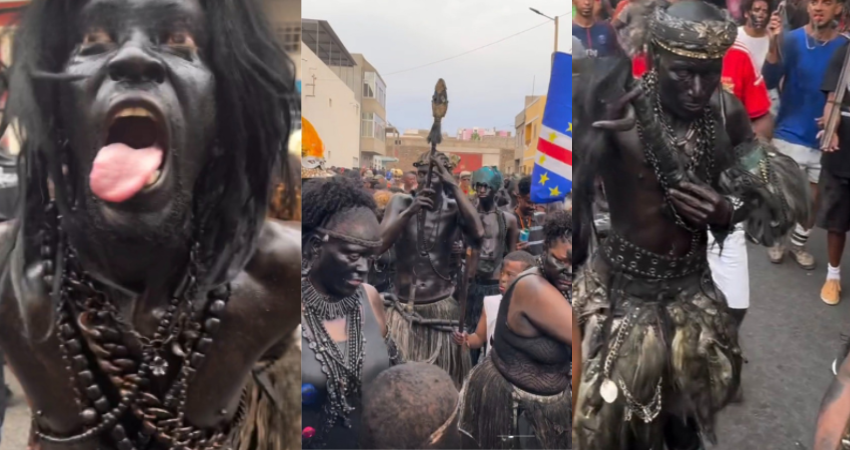
What are Madingas?
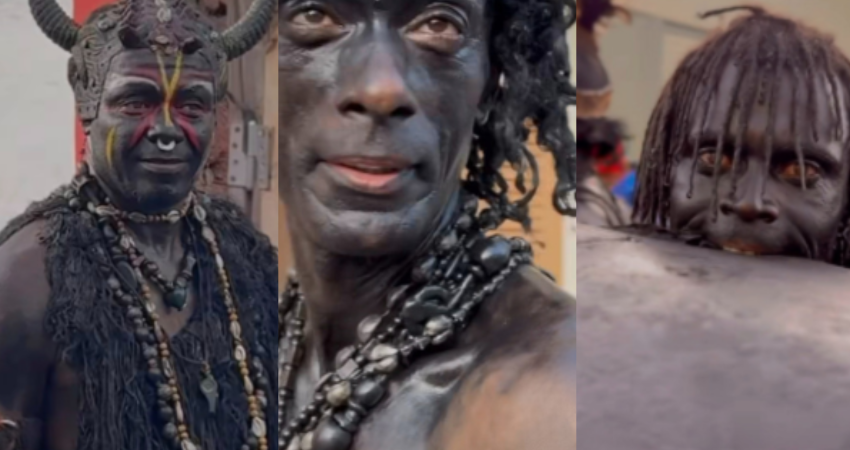
Madingas are carnival groups that cover themselves in black oil or tar. They wear skirts and carry spears while dancing to the rhythm of energetic drums as they parade through the streets of Mindelo. Their presence is a tribute to their African ancestors and a way to rediscover and embrace a lost identity. The Madingas are not just another carnival group; they are a symbol of pride and cultural heritage.
The history of the Madingas
The origins of the Madingas tradition are not entirely certain, but two popular theories exist:
- Mozambican King Gungunhana: In the late 19th century, King Gungunhana, who resisted Portuguese rule, was exiled to the Azores. During his journey, he passed through São Vicente. His proud presence inspired the locals, who sought to honor him.
- The Influence of the Mandinka Tribes: In the 20th century, a group of Mandinka people from West Africa passed through Mindelo on their way to an independence festival in Portugal. Their music and dance left such a strong impression on the local population that it was integrated into the São Vicente carnival.
The Madingas, as we know them today, were officially introduced in the 1940s by José Moreno, also known as Capote. He and his friends were passionate about festivities and formed the first Mandinga groups. Since then, their role in the carnival has only grown.
Madingas and the carnival of São Vicente
The carnival on São Vicente begins weeks before the official festivities. Every Sunday from January onward, the Madingas take to the streets of Mindelo, bringing energy with their drumming and dancing followers. The most famous group comes from the historic Ribeira Bote neighborhood. Their parades are extremely popular.
Although the Madingas participate throughout the carnival, their most significant moment is on the final day of the celebration: the Mandinga funeral. On this day, the Madingas carry black coffins through the streets of Mindelo, symbolizing the farewell to the carnival and paying tribute to their African ancestors. The parade ends at the ocean, where the coffins are ceremonially “buried” in the water. This special moment is accompanied by intense drum rhythms, exuberant dancing, and a crowd fully immersed in the energy of the spectacle. Some even jump into the ocean, as if offering their final carnival energy to the sea.